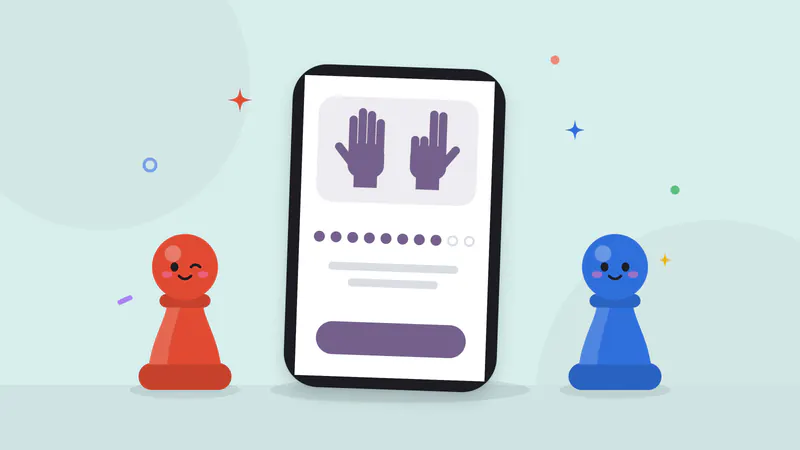
Never Have I Ever is a party game for three or more people. Someone says “Never have I ever…” and finishes the sentence with something, and everyone who has done it admits it by putting a finger down. The last person with fingers up wins. There is no board, no dice and almost nothing to learn, which is why the game turns up at sleepovers, on road trips, in classrooms and around the dinner table. This guide covers the classic rules, the ten-fingers rule, how this site runs the game on one phone, how the game ends, secret answers, house rules, keeping the game kind, and sample cards from each deck.
Overview
| Feature | Details |
|---|---|
| Players | 3 or more. On this site: 3 to 12 players on one device |
| Typical time | 5 to 15 minutes; 20 to 40 seconds a card |
| Ages | Any age with the right cards: Kids (6 to 12), Family (all ages), Friends (teens and adults), Work |
| Equipment | Your fingers, or one shared phone, tablet or laptop |
| Goal | Keep your fingers up. The last person with fingers up wins |
The game is also known as Ten Fingers, after the way you keep score. Many versions exist; the one on this site is the ten-fingers game that families and schools play, with the sentences dealt from decks of cards instead of made up on the spot.
How to play Never Have I Ever
The reader reads the card out loud: “Never have I ever…”
Everyone who has done it puts one finger down.
On this site the phone keeps count of everyone’s fingers left.
The next person reads the next card.
The classic game needs nothing at all:
- Everyone sits in a circle and holds up ten fingers.
- The first person says a sentence that starts with “Never have I ever”, such as “Never have I ever flown a kite”.
- Everyone who has done that thing puts one finger down, and usually says a word or two about it.
- The next person in the circle says the next sentence.
- When you have no fingers left, you are out of fingers. The last person with fingers up wins.
Making up sentences is part of the fun, but it is also where the game can go wrong: people go blank, or aim a sentence at one person. Cards fix both. A good card is about something some people have done and some have not, and it is something anyone would happily admit.
The ten-fingers rule
Each finger is one “I have”. Ten fingers means you can admit ten things before you are out, so a game with ten cards rarely has a winner by fingers alone. That is fine: the stories matter more than the score. If your group wants a faster finish, play with five fingers, or play twenty rounds.
The rule only counts things you have actually done: “nearly” does not count. When a card is unclear (“does it count if I was too little to remember?”), the group decides together, and the kind answer is usually to count it if you are not sure.
Everyone starts with ten fingers up, or five for a short game.
Each “I have” puts one finger down: nine left.
Never Have I Ever rules on this site
The game follows the classic rules with a few choices made for one shared phone:
- Setup: 3 to 12 names, one or more decks (Kids, Family, Friends, Work and your own My prompts), and Answers: Out loud or Secret. Under More options: Rounds (10, 20 or Endless), Skips each (1, 0 or Unlimited) and Fingers (10 or 5).
- The reader: each round has a reader, who reads the card out loud. The reader changes every round, in seat order, and a rematch starts with the next person.
- Out loud: everyone who has done it says so. The reader taps their names, including their own if it applies, and presses Confirm. If nobody has, the reader taps Nobody has.
- The reveal: the phone shows who has done it and everyone’s fingers left, with the lost finger marked.
- Cards: dealt from the chosen decks, each card once per game. Cards you saw in recent games on this device come last, so a new game starts with fresh ones.
What happens at zero
When your last finger goes down, you are out of fingers. On this site that does not mean leaving the game: you keep answering every card with everyone else, and the reveal still names you when you have done something. You just have nothing left to lose. Nobody has to sit and watch, and the person who ran out first often has the best stories anyway.
The game ends in one of three ways:
- Last fingers standing: as soon as only one person still has fingers up, that person wins.
- The rounds run out: after 10 or 20 rounds, the most fingers left wins, and ties share the win.
- End game: tap End whenever you like, and the result is decided the same way.
If the last few people lose their final fingers on the same card, nobody is left standing, and those players share the win. The results also hand out two friendly titles from the “I have” counts: Most innocent for the fewest and Most adventurous for the most. There is no loser wording anywhere.
Secret answers
Saying “I have” out loud is the classic way, and it brings out the stories. Some groups prefer Secret answers, chosen under Answers on the setup screen:
- The reader reads the card out loud and taps Answer in secret.
- The phone goes round the table, starting with the reader. A pass screen asks for the next person by name.
- That person taps I have or I haven’t while the others look away, then passes the phone on.
- When everyone has answered, the reveal shows the whole table at once: who has, who hasn’t, and the fingers left.
Secret answers suit shy players and big groups, and they stop people changing their answer after hearing the others. The pass screen hides the board between people, even after a reload, so nobody sees an answer early.
Out loud: say “I have”, and the reader taps your name.
Secret: each person taps I have or I haven’t while the others look away.
Skips and Undo
A card that does not suit the group can be skipped. Skip belongs to the reader and swaps the card for a new one. Each reader has one skip by default; under More options you can turn skips off or make them unlimited. A skipped card counts as seen, so it does not come back in the same game.
Undo takes back a whole round: the answers, the fingers and any skip. It never stops in the middle of secret answers, so it can’t reveal anyone’s choice.
House rules
Groups have their own versions. Popular house rules include:
- Five fingers: one hand instead of two, for a game that is over in a few minutes.
- Tell the story: anyone who puts a finger down shares the story in one sentence, or chooses not to.
- Points instead of fingers: nobody is ever out; count the “I have”s and see who has done the most. Here you can read that from the results table.
- Write your own: everyone adds one card before the game starts. On this site, use My prompts.
- The reader’s choice: the reader may skip one card per game without a reason. That is the default here.
Keeping it kind
Never Have I Ever works when everyone can laugh about their answers. A few rules keep it that way:
- Choose cards about experiences, not secrets. Food, travel, hobbies, school and small mix-ups are fun to admit. Anything that would embarrass someone is not.
- Never aim a card at one person. “Never have I ever forgotten my lines on stage” is fun until it is only true of one person in the room and everyone looks at them.
- Anyone can pass. If a question feels too personal, the person answering can stay quiet, and nobody asks why.
- Keep the stories short. A sentence or two each keeps the game moving for everyone.
The built-in decks follow these rules: nothing romantic or adult, nothing risky, nothing about money, bodies or anything private, and no brand names or real people.
Sample cards from every deck
Each built-in deck has more than 120 cards. Draw one at random, or read a few from each deck below.
Draw a random card
Family deck
Never have I ever…
sung happy birthday to a pet
Kids deck (6 to 12)
- Never have I ever… built a fort out of blankets and pillows.
- Never have I ever… called my teacher Mom or Dad by accident.
- Never have I ever… watched a caterpillar turn into a butterfly.
- Never have I ever… made a volcano erupt with baking soda.
Family deck (all ages)
- Never have I ever… looked for my glasses while wearing them.
- Never have I ever… put the cereal in the fridge and the milk in the cupboard.
- Never have I ever… learned a family recipe from a grandparent.
- Never have I ever… pulled a door that said push.
Friends deck (teens and adults)
- Never have I ever… sent a message to the wrong person.
- Never have I ever… sung the wrong lyrics with total confidence.
- Never have I ever… fallen asleep on a bus and missed my stop.
- Never have I ever… made a playlist for a friend.
Work deck
- Never have I ever… talked for a whole minute on mute in a video call.
- Never have I ever… named a file “final” and then made five more versions.
- Never have I ever… held the elevator for someone who then took the stairs.
- Never have I ever… brought homemade snacks for the team.
Never Have I Ever for kids, sleepovers and classrooms
For children, choose the Kids and Family decks and play out loud: half the fun is hearing about the frog someone caught. Five fingers keeps the game short for younger players. At a sleepover, Endless rounds with the Kids deck (or Friends for teenagers) let the game run until everyone is ready to stop.
In a classroom, the game is a gentle icebreaker: the teacher or a student reads, and the class answers with fingers in the air. Choose cards about hobbies, pets and trips so every answer is easy to share, and use Secret answers if the group is new to each other.
Your own cards
Every group has its own jokes and its own adventures. On the setup screen, tap Add my prompts and type what comes after “Never have I ever”, such as “eaten pancakes for dinner”. Each card can be 3 to 140 characters, and you can keep up to 100 on this device. Pick the My prompts deck to play them on their own or mixed in with the built-in decks. The Never Have I Ever hosting tips explain how to write cards that work.
Ready to play? Play Never Have I Ever on one phone, or try more party games like Truth or Dare and Charades.