Never Have I Ever is one of the easiest games to host: you need a phone, a few people and a minute to explain it. Hosting it well is about three choices: the cards, how people answer, and how the group treats each answer. This tutorial walks you through a first game and then those three choices, with tips for kids, families, friends and teams.
What you will learn
- How to set up and run your first game on one phone, step by step.
- Three ground rules to say before the first card.
- Which decks to choose for young children, older kids, families, teens and work teams.
- How to write your own cards that are fun to answer.
- When to answer out loud and when to answer in secret.
- How to keep shy players comfortable and the game kind.
If you want the full rules first, read the Never Have I Ever rules.
Your first game, step by step
- Open Never Have I Ever and type everyone’s names. Three to twelve people can play.
- Keep the Family deck chosen for a first game, or add the deck that fits your group (more on that below).
- Leave Answers on Out loud. Press Start.
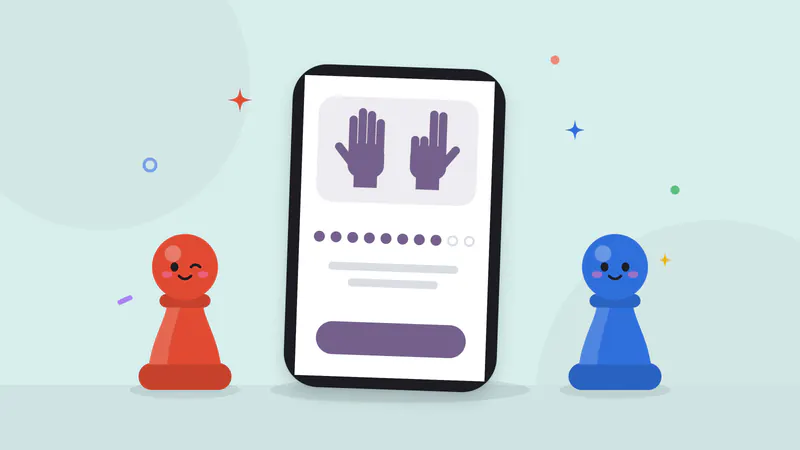
- Put the phone flat on the table where everyone can see it, and ask everyone to hold up ten fingers.
- The first reader reads the card out loud: “Never have I ever… gone camping in the rain.”
- Anyone who has done it says so and puts a finger down. The reader taps those names and presses Confirm. If nobody has, tap Nobody has.
- Look at the reveal together, hear a story or two, and tap Next card. The next person reads.
- After ten rounds the phone shows the results: fingers left for everyone, how many “I have”s, and two friendly titles.
The reader reads the card out loud: “Never have I ever…”
Anyone who has done it says so and puts a finger down.
The reader taps their names, and the phone shows everyone’s fingers left.
Tap Next card, and the next person reads.
That’s it. Most groups ask for a rematch straight away, and Rematch keeps the names and decks with the next person reading first.
Three ground rules to say before the first card
Thirty seconds of rules saves a lot of awkward moments:
- Only true answers count, and only things you have really done. “Nearly” doesn’t count, and nobody needs to prove anything.
- Anyone can skip a card or keep a story to themselves. No reason needed, no questions asked.
- Laugh with people, not at them. Everyone at the table has done something silly; that’s the point of the game.
With children, add a fourth: the reader reads the whole card before anyone answers, so nobody shouts out early.
Choosing decks for your group
Each built-in deck has more than 120 cards, all written for this game and checked for the same rule: nothing romantic or adult, nothing risky, nothing about money or bodies. You can choose several decks at once; the game deals from all of them.
Draw a card from each deck
Family deck
Never have I ever…
sung happy birthday to a pet
Young children (about 6 to 9)
Choose Kids on its own. Its cards are about pets, playgrounds, school, food and make-believe: “Never have I ever… pretended the floor was lava.” Play with 5 fingers (under More options) so the game ends before attention runs out, and help with the reading if needed.
Older kids (about 10 to 12)
Kids and Family together give a good mix of silly and everyday moments. Older kids enjoy reading the cards themselves, so let the reader role go round as the game intends.
Family game night
Family is written for every age at the same table, from grandparents to children: cooking mishaps, road trips, holidays and small mix-ups. Grandparents often have the best stories, so give them time to tell them. Add Kids when young children are playing.
Teens and adults
Friends is for teens and adults and stays clean: music, screens, travel, school and the message you sent to the wrong person. Mix in Family for a wider range. Ten fingers and 20 rounds make a good evening game.
Work and team days
Work is about meetings, video calls, email, coffee and office mix-ups, and it is written so that anyone, including a manager, can read every card out loud. It makes a quick icebreaker at the start of a team day. Use Secret answers for a team that has just met, and keep it to 10 rounds.
A mixed crowd
When you don’t know everyone, choose the deck that suits the youngest or most reserved person and add one more. Family with Friends is a safe choice for a group of teens and parents; Family with Work suits a team lunch with families invited.
Writing good cards
Add your own cards with Add my prompts on the setup screen. Type only what comes after “Never have I ever”, starting with a verb in the past: “eaten”, “built”, “forgotten”, “tried”. Good cards share a few things:
- About half the room has done it. If everyone has, nobody learns anything; if nobody has, nothing happens. “Seen snow” is too easy in some places and too hard in others, so think about your group.
- It is an experience, not a secret. Trips, food, hobbies, school, pets and small mix-ups are fun to admit. Anything someone would rather hide does not belong in the game.
- There is a story behind it. “Gotten lost in a supermarket” brings out stories; “owned a blue pen” does not.
- It is about everyone, not one person. A card that is only true of one person turns the whole table towards them. Keep inside jokes general enough that several people could say “I have”.
- It is short. One line that the reader can say in one breath. The game allows up to 140 characters, but the best cards are under 60.
A few examples that work well for most groups:
- “Never have I ever… baked a cake that sank in the middle.”
- “Never have I ever… read the last page of a book first.”
- “Never have I ever… waved at someone who was waving at someone else.”
Write five or six before the game, or ask everyone to add one card each. You can keep up to 100 on the device, and they stay there for next time. Pick the My prompts deck to play them.
Out loud or secret: reading the room
Out loud is the classic game and the best for stories. Everyone hears who has done what, and the reader taps the names. Choose it for family, friends and anyone comfortable with each other.
Secret answers send the phone round the table. Each person taps I have or I haven’t behind a pass screen, and the reveal shows everyone at once. Choose it when:
- the group has just met, or includes someone shy;
- people tend to change their answer after hearing the others;
- you want a little suspense before each reveal.
Out loud: say “I have”, and the reader taps your name.
Secret: each person taps I have or I haven’t while the others look away.
Secret rounds take a little longer, because the phone goes to every person, so with a big group keep the game to 10 rounds.
Watch the room as you play. If the stories are getting long, move on with Next card. If a card falls flat, the reader can Skip it. If people are drifting, End the game and start a rematch with a different deck.
Keeping shy players comfortable
- Give everyone the reader’s job in turn, so nobody is put on the spot more than anyone else. The game does this for you.
- Never ask for the story. Some people will want to tell it; let the rest simply put a finger down.
- Use secret answers for the first game with a new group, then switch to out loud once people relax.
- Remember that running out is fine. People who are out of fingers keep playing along, so nobody sits out.
Quick reference for hosts
| Group | Decks | Fingers | Answers | Rounds |
|---|---|---|---|---|
| Young children | Kids | 5 | Out loud | 10 |
| Older kids | Kids, Family | 10 | Out loud | 10 or 20 |
| Family game night | Family (+ Kids) | 10 | Out loud | 20 |
| Teens and adults | Friends (+ Family) | 10 | Out loud | 20 or Endless |
| A team at work | Work | 5 or 10 | Secret | 10 |
| People who just met | Family | 10 | Secret | 10 |
When the game is over, the results show everyone’s fingers left and two friendly titles: Most innocent and Most adventurous. For more games with the same group, try Truth or Dare, Charades or the other party games.