Would you rather is a question game for two or more people. Someone asks a question with two options, “Would you rather fly like a bird or swim like a fish?”, and everyone has to pick one. There are no points, boards or winners. The fun comes from the choices people make, the reasons they give and the surprise when the group splits down the middle. This guide covers the classic rules, how this site runs the game on one phone, the two ways to vote, skips and house rules, how to keep it kind, and a sample of pairs from each deck.
Overview
| Feature | Details |
|---|---|
| Players | 2 or more. On this site: 2 to 12 players on one device |
| Typical time | 5 to 15 minutes for 10 cards; about a minute per card |
| Ages | Any age with the right cards: Kids (6 to 12), Family (all ages), Friends (teens and adults), Work |
| Equipment | Nothing, or one shared phone, tablet or laptop |
| Goal | Pick one of two options, see how the group split and talk about why. Nobody wins or loses |
There is no official rulebook. The game is played at sleepovers, around dinner tables, on long drives and in classrooms, usually with questions made up on the spot. Making them up is part of the fun, but it is also where a game can stall or go somewhere unkind. A deck of prepared cards keeps it moving and keeps it friendly.
How to play would you rather
The reader reads the card out loud: “Would you rather A or B?”
Everyone picks one: hands up for A, or a secret vote.
Compare: the phone shows how the group split.
Talk about why. Then the next person reads the next card.
- Sit together. Everyone sits where they can see and hear each other.
- Pick a reader. One person reads the question out loud. The reader changes every round.
- Ask the question. “Would you rather A or B?” The reader says both options clearly.
- Everyone picks. Each person picks A or B. You must choose one, even if both sound strange.
- Compare. Say or show your picks, then talk: why did you choose that?
- Next card. The next person reads the next question. Keep going for the rounds you agreed, or until the group wants to stop.
Would you rather rules on this site
The game here follows those classic rules, with a few choices that keep it quick and fair:
- Players: 2 to 12, each with a name and a color. Most of the time the phone lies on the table where everyone can see it.
- Decks: Kids (6 to 12), Family (all ages, the default), Friends (teens and adults, still clean), Work (light questions for teams) and My prompts, your own pairs. Pick at least one; mix as many as you like.
- The reader: the first player reads the first card, then the reader moves one seat round the table each round. A rematch starts with the next person.
- Voting: Show of hands (the default) or Secret vote. Both are explained below.
- Rounds: 10 (the default), 20 or Endless. End stops the game at any time.
- Skips: 1 per player for the whole game (the default), none, or unlimited. A skip belongs to the reader of that card.
- No repeats: a card never comes up twice in a game. The game also remembers about 200 cards from your recent games on this device and deals fresh ones first.
- Undo: takes back the whole last round, or the last skip.
A show of hands
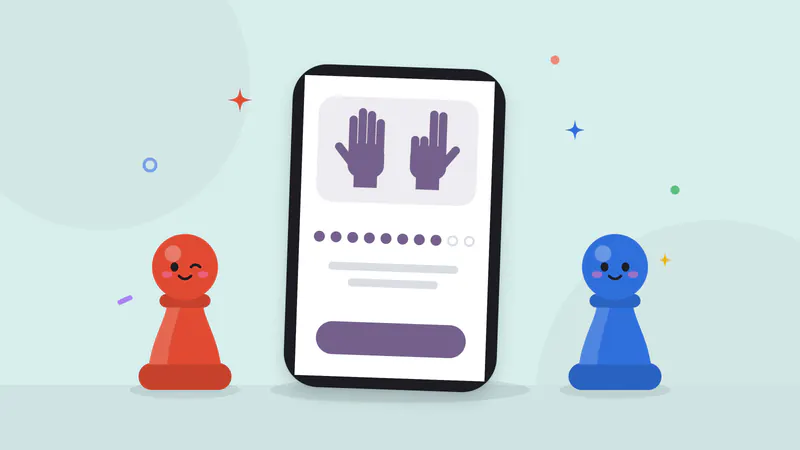
This is the quick way to play, and the best one for big groups. The reader reads the card, and everyone who picks A raises a hand. The reader counts the hands, taps that number (0 up to the number of players) and then Reveal. Everyone who didn’t raise a hand picked B, so the phone can show the split straight away: “3 chose A, 1 chose B”.
A show of hands is public, which is part of its charm: people see each other’s choices as they make them, and the jokes start before the reveal. It also means people can be swayed by the room. If your group always ends up agreeing, try a secret vote.
A secret vote
The reader reads the card and taps Vote in secret. Now the phone goes round the table, starting with the reader:
- A pass screen hides the card. The person whose turn it is taps the button with their name.
- They see the two options as big buttons and tap A or B. Nobody else looks.
- The pass screen comes back, and they hand the phone to the next person.
Nothing about the votes shows until the last person has voted: not on the screen, not in the player list and not in the sounds. Then the table sees the split with the names under each side. Secret votes take a little longer, but they make the reveal a real moment, and they let people pick what they actually think.
A show of hands: the reader counts the hands for A and taps that number.
A secret vote: each person taps A or B on the phone while the others look away.
The reveal
After every card the phone shows a bar split between A and B, with the count on each side, and marks the option most people chose. A tie is a tie: there is no tiebreak and no score. This is the moment to talk. A good habit is to ask one person from the smaller side to explain their pick. They usually have the most interesting reason.
When the game ends, the results show the card your group agreed on most, the closest call and, after secret votes, who went with the crowd most often and who went their own way most often. Nobody is a loser: going your own way is half the fun.
Skips and cards nobody wants
Sometimes a card just doesn’t fit the group, or the reader doesn’t like it. The reader taps Skip, and a new card takes its place. A skipped card counts as seen, so it won’t come back in the same game. When the reader has used their skips, the button says so. With younger children, choose unlimited skips under More options; with a group that likes a challenge, choose none.
House rules
The game on this site keeps the classic rules, but plenty of groups add their own. A few that work well:
- Predict the split: before the reveal, the reader guesses how many will choose A. A close guess earns a cheer.
- One-word reasons: after each reveal, everyone gives their reason in one word. Short, fast and often funny.
- Switch sides: after the talk, anyone who has changed their mind may switch. Count how many did.
- Lightning round: five cards in a row with no talking, then talk about all five at the end.
- Points on paper: if your group wants a score, give a point to everyone on the bigger side, or to everyone on the smaller side for a “go your own way” game. Keep it on paper; the site itself never names a winner.
Keeping it kind
Would you rather is gentle by nature, because it is about choices rather than about people. A few habits keep it that way:
- Laugh with people’s reasons, never at them.
- Anyone can skip a card, and nobody has to explain why.
- When you write your own pairs, avoid anything about bodies, money, crushes or real people. The built-in decks follow the same rule.
- With a mixed group, choose the deck that fits the youngest person playing.
Sample would you rather questions
Each deck on this site has over 120 original pairs. Draw one at random, or read a few from each deck below.
Draw a random question
Family deck
Would you rather…
- Option A: have a quiet library day
- Option B: have a loud music day
Kids deck (6 to 12)
- Would you rather have a pet penguin or a pet koala?
- Would you rather live in a treehouse or live in a castle?
- Would you rather talk like a robot all day or talk like a pirate all day?
- Would you rather make your toys come alive or make your drawings come alive?
- Would you rather have a bed shaped like a race car or a bed shaped like a rocket?
Family deck (all ages)
- Would you rather live by the sea or live in the mountains?
- Would you rather have a library in your house or a cinema in your house?
- Would you rather always know what time it is or always know which way is north?
- Would you rather be the best cook in the family or the best storyteller in the family?
- Would you rather spend a rainy day reading or spend a rainy day baking?
Friends deck (teens and adults)
- Would you rather know how every movie ends before you watch it or forget every movie the day after you watch it?
- Would you rather have two close friends or twenty good friends?
- Would you rather see every sunset for a year or every sunrise for a year?
- Would you rather bring the best playlist or bring the best snacks?
- Would you rather always get the window seat or always get the aisle seat?
Work deck
- Would you rather have a walking meeting or a meeting on comfy sofas?
- Would you rather be great at presentations or great at spreadsheets?
- Would you rather do the hardest task first or the easiest task first?
- Would you rather celebrate wins with cake or with a team outing?
- Would you rather work from a beach for a week or from a mountain cabin for a week?
Would you rather for kids and classrooms
For children, the game is a gentle way to practise giving reasons and listening to others. Choose the Kids deck, a show of hands and unlimited skips. In a classroom, the teacher can be the reader for every card: read the card, count the hands, tap Reveal. Ask a child from each side for one reason, then move on. Ten cards fit easily into the start or end of a lesson.
Would you rather at work
The Work deck is written for teams: desks, meetings, habits and team life, with nothing about pay, nobody’s job and no complaints about colleagues. It makes a quick warm-up for a meeting or a team lunch. Share a screen and vote by a show of hands, or pass a phone round a small team for a secret vote.
Your own pairs
Tap Add my prompts on the setup screen to write pairs for your group: an option A and an option B, each 3 to 140 characters, up to 100 pairs. They are saved in this browser on this device. Pick the My prompts deck to play them, on their own or mixed with the built-in decks. The would you rather hosting tips explain how to write pairs that are hard to choose between.
Ready to play? Start a game of Would You Rather, or try another of our party games, like Truth or Dare.