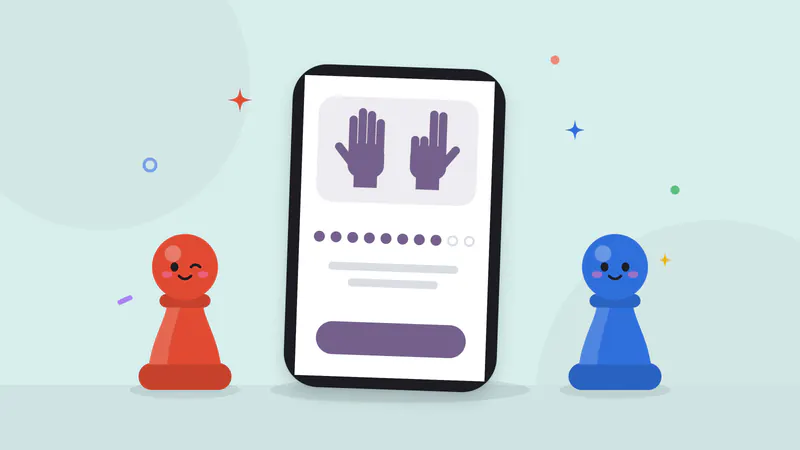
Most Likely To is a party game for three or more people. A question names a habit, a talent or a funny future (“Who is most likely to adopt three cats?”), and the group decides which player fits it best. The person chosen gets the title. There is no board and nothing to buy: the fun comes from the reasons people give for their choice. This guide covers how a round works, the rules this site uses on one phone, pointing versus the secret vote, ties, self-votes and skips, house rules, keeping the game kind, and a few sample questions from each deck.
Overview
The game has no official rulebook. It is a folk game, played at sleepovers, family dinners, road trips and team meetings, and it goes by several names: “most likely to”, “who’s most likely to” and “who’s more likely to”. The idea is always the same. Someone reads a question, the group picks a person, and the room laughs or argues about the choice. The rules below are the ones this site uses, and each one is explained so you can change it at home if your group plays differently.
- Players: 3 to 12. Two people can play, but every vote would simply be “the other one”.
- Time: about half a minute a round. Ten rounds take 5 to 10 minutes.
- What you need: one phone, tablet or laptop that everyone can see, or a list of questions and a good reader.
How to play most likely to
The reader reads the card out loud: “Who is most likely to…”
Count to three. Everyone points at once, or votes in secret.
Count the fingers, or let the phone count a secret vote.
The person picked gets the title. The next person reads.
- Sit in a circle. Everyone should be able to see everyone else, because you will be pointing.
- Read the question. The reader says the whole question out loud: “Who is most likely to win a karaoke contest?”
- Count and point. The reader counts “one, two, three”, and on three everyone points at one person at the same time. Pointing together matters: nobody can wait and copy the others.
- Find the title holder. Whoever has the most fingers pointing at them wins the title for that question.
- Ask why. This step isn’t in any rule, but it is the heart of the game. Ask a couple of people why they chose who they did.
- Pass the reading on. The next person reads the next question.
Keep going for as many rounds as you like. Some groups keep score, and some just play until the questions run out or dinner is ready.
Most Likely To rules on this site
The game on this site follows the steps above, with the phone keeping track:
- Setup: type in 3 to 12 names, choose one or more decks, and choose how to vote: Everyone points (the default) or Secret vote. Under More options you can set the number of rounds (10, 20 or Endless), skips per person (1, 0 or unlimited) and whether self-votes are allowed.
- The reader: each round has a reader, shown under the card. The reader changes every round, so everyone reads in turn.
- Everyone points: after the count, the reader taps the name with the most fingers on the phone and confirms. If the pointing is split and nobody clearly leads, the reader taps No clear winner and nobody gets that title.
- Secret vote: the reader taps Start the secret vote, and the phone goes round the table, starting with the reader. Each person picks a name in private, then passes the phone on.
- The title: the person picked, or everyone tied on the most votes in a secret vote, gets the title. Each title is worth one point.
- Skips: the reader can skip a card they would rather not read. The skip is charged to the reader, and a new card comes up.
- The end: after the last round, or when you tap End and confirm, the results list every title and who won it, plus each person’s titles and skips. The players with the most titles share the top spot. Rematch plays again with the same names and decks, and a new person reads first.
- Undo takes back the last round. The same card comes back, and a skip that was used comes back too.
Pointing or a secret vote
Both ways of voting are fair, but they feel different.
Everyone points: on three, all at once, and everyone sees the result.
Secret vote: each person votes on the phone in turn, and the reveal shows only the counts.
Everyone points is fast and loud. The whole round happens in a few seconds, everyone sees the result at once, and the reactions (“Me? Why me?”) are half the fun. It works best with 3 to 8 players, when the fingers are easy to count. The reader enters the result, so they should be honest about close calls: when two people are level, No clear winner is the right answer.
Secret vote takes a minute longer but gives quieter players a voice, because nobody sees anyone else’s choice. The phone shows a screen that asks everyone else to look away before each person votes, and it hides the board until that person taps to start. When the last vote is in, the reveal shows the vote counts as bars, with the title holder marked (people with no votes are left out). With 9 to 12 players, the secret vote is easier than counting a dozen hands.
The secret vote shows counts only. It never shows who voted for whom, during the game or in the results. If someone wants to explain their vote, they can, but nobody has to.
Ties
When everyone points, ties are judged by eye. If one person clearly has more fingers, they win the title. If it is close, the reader taps No clear winner, and the game moves on with no title for that card. Some groups prefer a quick re-point between the tied players; you can do that before the reader taps a name.
In a secret vote the phone counts exactly. If two or more people tie for the most votes, they share the title, and each of them gets a point. The reveal says “Shared title” and lists everyone who shares it.
Self-votes
Can you point at yourself? On this site, yes by default. Some cards describe one person so well that pointing at yourself is the honest answer, and it often gets the biggest laugh of the round.
If your group prefers to vote only for others, turn off Self-votes under More options. In a secret vote your own name then stays in the list but is greyed out, so every voter sees the same list. When everyone points, self-votes are a table rule: the phone can’t see fingers, so the group keeps it honest.
Skips and rounds
Every player gets one skip by default, and the reader uses it. A skip replaces the card with a new one and counts as seen, so it won’t come back in the same game. You can turn skips off or make them unlimited under More options. Skips are there so nobody has to read a card they don’t like, with no reason needed.
Rounds can be 10, 20 or Endless. With Endless, the game keeps dealing cards until you tap End, and if you play through every card in your chosen decks, they are shuffled and dealt again.
House rules
- Reasons round: after each reveal, the title holder picks one person who must explain their vote.
- Two-name cards: the reader names two players, and everyone points at one of them. This is closer to “who’s more likely to”.
- No repeats: once someone holds three titles, they can’t be picked again until everyone else has one.
- Theme night: play only the Work deck at an office lunch, or only the Kids deck at a birthday party.
- Write your own: each player adds two questions of their own before the game starts, using My prompts on the setup screen.
Keeping it kind
The best questions make the person chosen feel noticed, not singled out. Every built-in card on this site follows a few simple rules:
- Talents, habits and funny futures only: “become a famous chef”, “remember every birthday”, “start a band”.
- Nothing about looks, bodies, relationships, money, drinking or anything dangerous.
- No questions about failing at something, getting into trouble or being bad at anything.
- The Work and Classroom decks stay professional and suitable for a meeting or a lesson.
If a card doesn’t suit your group, skip it. And if a title lands badly, a quick “and who’s the runner-up?” moves the moment along.
Sample questions from each deck
Each deck has over 120 questions written for this site. Draw one at random, or read a few from each deck below.
Draw a random question
Family deck
Who is most likely to…
keep every houseplant alive?
Kids deck (6 to 12)
- Who is most likely to build a robot that tidies their room?
- Who is most likely to teach a parrot to say hello?
- Who is most likely to make up a brand-new holiday?
Family deck (all ages)
- Who is most likely to plan a surprise party without anyone guessing?
- Who is most likely to fix anything with a roll of tape?
- Who is most likely to win at charades every time?
Friends deck (teens and adults)
- Who is most likely to see the northern lights?
- Who is most likely to stay calm in an escape room?
- Who is most likely to start a podcast with their best friend?
Work deck
- Who is most likely to know every keyboard shortcut?
- Who is most likely to run a meeting that ends early?
- Who is most likely to remember what every acronym stands for?
Classroom deck
- Who is most likely to discover a new star with a telescope?
- Who is most likely to notice when someone needs help?
- Who is most likely to invent a better school bag?
Most likely to for kids and classrooms
Children love the game because it is about them: their talents, their plans and their silly side. Keep the questions positive, keep rounds short, and let every child read at least once. In a classroom, the Classroom deck works as a warm-up at the start of a lesson or a calm end to a busy day. Teachers can turn on the secret vote, so every child votes without anyone watching and nobody sees who voted for whom.
Most likely to at work
As an icebreaker, Most Likely To helps a team learn small, friendly facts about each other. Ten rounds of the Work deck fit into the start of a meeting. Let people skip freely, ask for one reason per round rather than from everyone, and finish while the energy is still high.
Your own questions
Tap Add my prompts on the setup screen to write questions for your group. Write the end of the question only (“plan the team’s next outing”), or the whole question: the game takes out the “Who is most likely to” part and the question mark for you. Each one can be 3 to 140 characters, up to 100 of them, saved in this browser on this device. Then choose the My prompts deck to play them, alone or mixed with the built-in decks.